
Commercial Auto & Trucking Insurance in Georgia
Tanner Insurance Agency writes the trucks, vans and work pickups that Georgia and Alabama businesses run on, and because we are independent we take one set of driver and vehicle information to several carriers instead of one. Most owners come to us because the policy they have was never written for business use in the first place.
The Moment Your Work Truck Needs a Business Policy
Personal auto insurance covers a personal vehicle. A truck earning money is a different risk, and a personal carrier can deny a business-use claim after the accident, once the adjuster asks what the truck was doing that day. Commercial auto insurance is part of the broader business coverage we assemble on our
Business Insurance side, and the vehicles are usually where the conversation starts.
A vehicle almost always belongs on a commercial policy when any of the following is true:
- The title or the registration is in the business name rather than yours.
- The company name, logo or phone number is lettered on the doors.
- The truck hauls freight, materials or equipment for pay.
- An employee drives it, whether or not the vehicle is yours.
- It carries a rated capacity, a bed, a boom, a dump body or a hitch used for work.
If you are unsure which side of that line a vehicle falls on, call us before you file a claim rather than after. Sorting it out takes one phone call and a look at the title. The liability side of the business, a customer hurt at the shop or damage caused on a job site, is handled separately under
General Liability Insurance, and most owners need both.
What Georgia Requires, by How the Truck Is Used
Georgia commercial auto insurance requirements are not one number. They step up as the vehicle gets heavier and as the work crosses more lines, and the figure that actually governs your operation is usually set by a filing or a shipper rather than by the state.
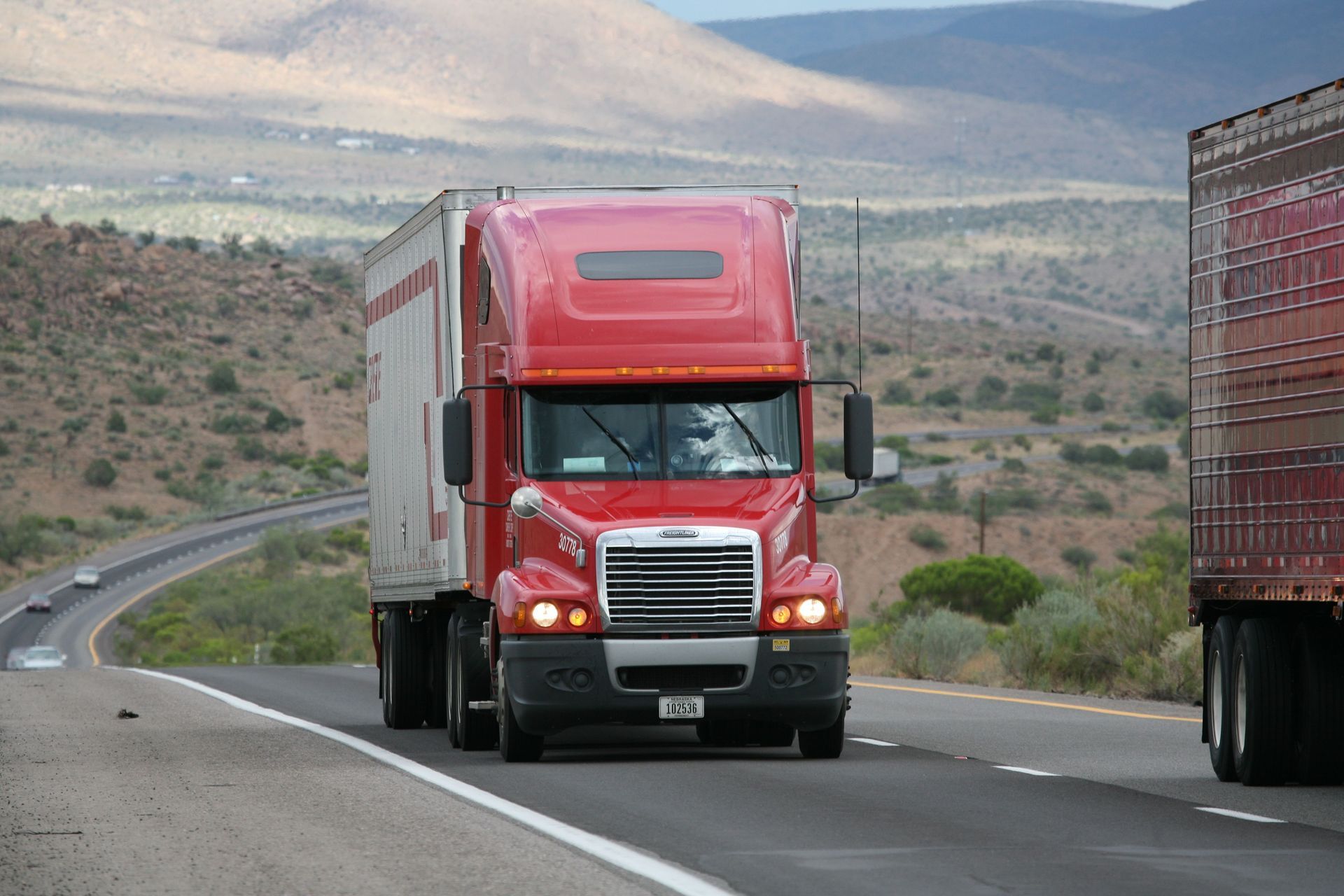
A vehicle registered to a business in Georgia
At minimum, $25,000 in bodily injury liability per person, $50,000 per accident, and $25,000 in property damage. These are the same floors a personal policy carries, applied to a business-owned vehicle.
A for-hire truck over 10,001 pounds hauling inside Georgia
Registration as a Georgia intrastate motor carrier, with liability limits of $100,000 per person, $300,000 per accident and $50,000 in property damage.
A truck crossing a state line
The federal minimum of $750,000 combined single limit for general freight, with higher figures required for hazardous cargo and for carrying passengers.
Those are floors, not recommendations. A loaded truck in a serious wreck passes $100,000 in a hospital and passes $50,000 in property damage with one late-model vehicle, and brokers and shippers routinely ask to see $1,000,000 in liability plus a cargo limit before they will release a load. Tell us what the shipper is asking for and we will work to place limits that meet the filing, then get the certificate in your hand.
Coverage Built Around What the Vehicle Actually Does
A commercial auto policy is assembled, not picked off a shelf. These are the parts we walk through on every quote:
- Liability coverage for injuries and property damage your vehicle causes, at limits set by your filing, your contracts or your own comfort rather than the state floor.
- Physical damage coverage, comprehensive and collision, on the tractor, the truck, the trailer and any mounted equipment.
- Uninsured and underinsured motorist coverage for the driver who hits your truck and has nothing behind him.
- Medical payments and driver coverage for the person behind the wheel.
- Hired and non-owned auto coverage for a rented truck or an employee running an errand in his own pickup.
- Motor truck cargo coverage for the freight on the trailer.
- Drive-other-car coverage for owners and officers who have no personal vehicle of their own.
- Roadside assistance and rental reimbursement, so a down truck does not stop the week.
Because we are independent, we can raise a limit or add an endorsement at one carrier when another will not write it, and we can show you what each change costs before you decide.
A vehicle registered to a business in Georgia
At minimum, $25,000 in bodily injury liability per person, $50,000 per accident, and $25,000 in property damage. These are the same floors a personal policy carries, applied to a business-owned vehicle.
Trucking Insurance for the Loads South Georgia Runs
We know the work that moves through Coffee County because we insure it. Log and timber hauling out of the pine, dump and gravel work for road and site contractors, agricultural hauling that gets busy for a few weeks and then goes quiet, and the delivery vans and service pickups that run in town every day.
Owner-operators and small fleets shop a specific set of coverages, and we write all of them:
- Auto liability at the limit your authority or your broker requires.
- Physical damage on the tractor and on the trailer, insured separately.
- Motor truck cargo, written for what you actually haul and at the limit the shipper asks to see.
- Non-trucking liability for the hours the truck is off dispatch and running empty.
- Trailer interchange for a trailer that belongs to somebody else.
- Hired and non-owned auto for drivers using their own vehicles.
We will write a single truck as readily as a yard full of them. A one-truck operation gets the same driver-by-driver, VIN-by-VIN quoting as a fleet, which is not always true of the quotes that come back from a form online.

Policies That Flex With Your Fleet and Your Season
Flexible policies that fit your fleet and your operations, whether you run out of Pearson, GA, across south Georgia, or over the line into
Alabama. Seasonal hauling, a truck added mid-year, a driver hired in February, a trailer sold in June: we adjust the policy as the operation changes instead of leaving you to discover the gap at renewal.
Written by the Agency That Knows These Roads
We have insured businesses from the same office in Douglas and Coffee County since 1984, and we watch the same log trucks and farm traffic come through on US 441 and US 319 that your drivers do. We write commercial auto and trucking coverage in Douglas, Pearson, Ambrose, Broxton, Nicholls and Willacoochee, along with the rest of Georgia.
- Independent since 1984, with several carriers competing for your trucks instead of one company's rate.
- A phone answered by someone here Monday through Friday, 8:00 to 5:00, closed noon to 1:00.
- Certificates, filings and ID cards handled from the same desk that wrote the policy.
- Commercial auto, general liability, farm hauling and the building all reviewed in one sitting.
Questions Truck and Fleet Owners Ask Us
-
What is the difference between personal auto insurance and commercial auto insurance?
Commercial auto insurance covers vehicles used for business, including hauling goods, carrying equipment and transporting employees. A personal auto policy is written for personal use and can deny a business-related claim after the fact, which is the worst possible time to find out.
-
Do I need commercial auto insurance if my truck is in my business name?
Yes. A vehicle titled or registered to a business needs a commercial policy, because the business, not you personally, is the one being sued if the truck causes an accident. In Georgia that vehicle has to carry at least $25,000 in bodily injury liability per person, $50,000 per accident and $25,000 in property damage.
-
Do I need commercial auto insurance if I only have one business vehicle?
Yes. One vehicle used for business should be on a commercial policy, and a single truck can be quoted just as easily as a fleet. Rates are built from the driver, the vehicle and the use, not from how many units are on the schedule.
-
What does commercial auto insurance typically cover?
It covers liability for injuries and property damage your vehicle causes, physical damage to the vehicle itself, medical payments for the driver, and uninsured motorist coverage. Cargo, trailer interchange, non-trucking liability and hired and non-owned auto are added as the operation calls for them.
-
How much liability does a for-hire truck need in Georgia?
A for-hire vehicle over 10,001 pounds hauling inside Georgia registers as an intrastate motor carrier and carries $100,000 per person, $300,000 per accident and $50,000 in property damage. A truck crossing a state line falls under a federal minimum of $750,000 combined single limit for general freight. Most brokers and shippers ask for $1,000,000 regardless of which minimum applies.
-
Does having a USDOT number change my insurance?
It changes what has to be filed and proven, more than what the policy covers. Authority usually means a carrier files proof of financial responsibility on your behalf and holds the limits that authority requires, so tell us your USDOT and MC numbers up front and we will match the policy to the filing.
-
What affects the price of commercial truck insurance?
Driver motor vehicle records and years of experience, radius of operation, what you haul, vehicle values and weights, deductibles, claims history and the liability limit you carry. Radius and driver records tend to move the number the most, which is why we ask for licenses and a vehicle list before quoting.
-
How fast can you get me a certificate of insurance?
Usually the same business day, and often within the hour if the policy is already in place and we have the shipper's or job's exact wording. Call (912) 384-0114 with the certificate holder's name and requirements and we will get it out.
-
Does my personal auto policy cover my work truck?
Sometimes, and only when the truck is genuinely a personal vehicle you also drive to work. Once the truck is titled to the business, lettered with the company name, hauling for pay or driven by an employee, it belongs on a commercial policy.
One Call Tells You Whether Your Trucks Are Really Covered
Call (912) 384-0114 or send us the details and we will look at the vehicles, the drivers and the limits together. Have your VINs, driver names and license numbers, your radius of operation and what the trucks haul ready, and the first call can do real work instead of ending in a callback.